
An analytical article by Yousef Bavar, Advisor and Manager of Public Relations and International Affairs, Chabahar Free Zone Organization
The ECO Summit, scheduled to be hosted by Tehran on 3–4 December 2026 (12–13 Azar 1405), presents a strategic opportunity to articulate Iran’s position in the region’s economic landscape and outline a new horizon for cooperation among the member states of the Economic Cooperation Organization (ECO). The summit is taking place at a time when geopolitical developments, changing global trade routes, the growing importance of supply-chain security, and intensifying competition over transport corridors have made the expansion of regional economic cooperation more important than ever.
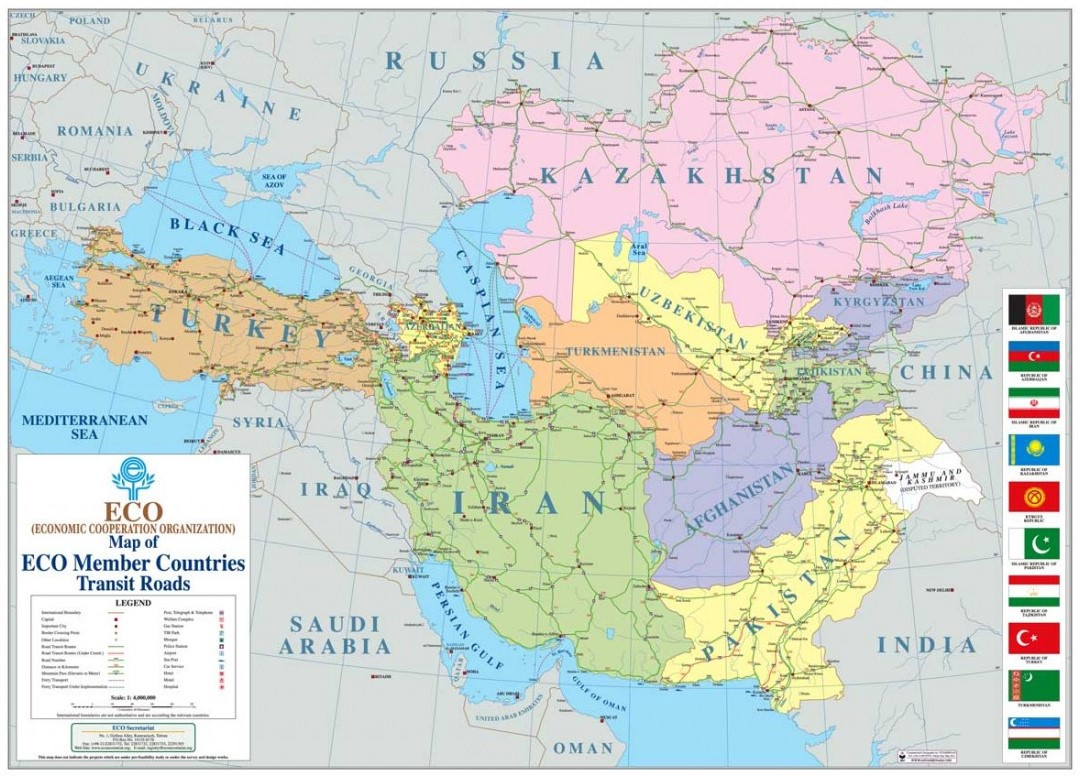
With ten member states—Iran, Pakistan, Türkiye, Azerbaijan, Afghanistan, Kazakhstan, Kyrgyzstan, Tajikistan, Turkmenistan, and Uzbekistan—ECO spans a vast geographical area extending from South Asia to Central Asia, the Caucasus, and Anatolia. This region possesses complementary capacities in energy, mineral resources, agriculture, industry, transportation, trade, and consumer markets. If effectively connected through infrastructure and economic cooperation, these capacities could form a powerful network of regional collaboration.
Despite this potential, intra-regional trade and structured economic cooperation still have considerable room for growth. Achieving this objective requires moving beyond political understandings and joint declarations toward concrete projects, joint investments, trade facilitation, transport infrastructure development, and the creation of regional value chains.
In this context, Iran’s strategic geographical position at the intersection of the North–South and East–West routes gives it the potential to become one of the principal hubs connecting the economies of ECO member states. Iran’s free zones can complement this geographical advantage by facilitating trade, production, logistics, and investment, thereby turning it into tangible economic opportunities and operational cooperation. Among these zones, Chabahar holds a particularly prominent position due to its direct access to the open waters of the Indian Ocean and its proximity to the markets of South Asia and Central Asia.
*Economic Diplomacy and the Neighborhood Policy of the National Accord Government: From Political Engagement to Economic Integration*
The neighborhood policy is one of the central approaches guiding the foreign policy of the Islamic Republic of Iran and the National Accord Government. It emphasizes strengthening relations with neighboring countries, expanding regional cooperation, and making use of shared geographical, historical, cultural, and economic capacities. Within this framework, neighboring and regional countries are not merely parties to political and diplomatic engagement; they are also potential partners in developing trade, investment, production, transit, energy, and infrastructure cooperation.
Economic diplomacy, in this context, serves as the link between foreign policy and tangible economic interests. It seeks to translate political relations and diplomatic understandings into real opportunities for economic actors, increased trade, investment attraction, expanded export markets, and participation in joint projects. In other words, economic diplomacy delivers results when political relations are reflected in trade agreements, joint production projects, reliable transit routes, and mechanisms that facilitate business activity.
ECO member states—particularly Pakistan, Afghanistan, Türkiye, Azerbaijan, and the Central Asian countries—represent some of the most important areas for advancing this approach. Geographical proximity, complementary economic needs, natural and mineral resources, agricultural capacities, and the need for access to regional and global markets provide a solid foundation for expanding bilateral and multilateral cooperation.
In this process, free zones can serve as operational arms of economic diplomacy and the neighborhood policy. They possess legal, infrastructural, and administrative capacities that can facilitate trade, attract investment, establish joint economic centers, and develop production and logistics activities. Chabahar Free Zone, owing to its direct access to international waters, proximity to Pakistan, closeness to Afghanistan, and potential connectivity with the transport networks of Central Asia and the Caucasus, can become one of the principal hubs for implementing this policy.
From this perspective, the ECO Summit in Tehran provides an opportunity to translate the National Accord Government’s neighborhood policy into a regional economic program and a portfolio of joint projects. Such a program would enable the free zones of Iran and ECO member states to operate not as isolated entities, but as complementary links in a network of trade, production, investment, and transit.
*Free Zones: A Complementary Network for Economic Cooperation among ECO Member States*
One of the major opportunities for regional economic cooperation lies in establishing structured links among the free and special economic zones of ECO member states. These zones can use their legal and economic advantages to facilitate the participation of investors, manufacturers, transport companies, and traders from member countries.
In Iran, the geographical distribution of free zones across the north, south, east, and west provides an opportunity to establish a complementary network connecting the country with neighboring markets. In the south and southeast, Chabahar Free Zone and the Rimdan exclave can support economic links with Pakistan, Afghanistan, and South Asian markets. In eastern Iran, the Sistan and Dogharoun free zones can play a role in expanding economic cooperation with Afghanistan. In the north and northeast, Sarakhs and Incheh Borun free zones have the potential to connect Iran with Turkmenistan and other Central Asian countries.
Along the Caspian Sea, Anzali and Mazandaran free zones can facilitate trade with Kazakhstan, Turkmenistan, and Azerbaijan. In the northwest, Aras, Ardabil, and Maku free zones are strategically positioned to expand commercial relations with Azerbaijan, the Caucasus, Türkiye, and European markets.
These capacities will achieve their full potential only if they move beyond fragmented and isolated activities and become part of a coordinated regional program. Regular meetings among the heads of free zones in ECO member states, sister-zone partnerships, joint consortia, the exchange of commercial information, joint investment initiatives, and shared logistics, warehousing, processing, and export projects could provide the foundations for such a network.
Under this model, each free zone would contribute according to its geographical and economic advantages, while the combined capacities would strengthen economic ties among ECO member states.
*Chabahar: ECO’s Ocean Gateway and a Connecting Link between South Asia and Central Asia*
Among Iran’s free zones, Chabahar enjoys a distinctive position. Located on the coast of the Gulf of Oman and adjacent to the open waters of the Indian Ocean, it provides direct access to the ocean without requiring vessels to pass through the Strait of Hormuz. This geographical advantage makes Chabahar an important gateway connecting Iran with South Asian markets, East Africa, and international trade routes.
Its proximity to Pakistan, closeness to Afghanistan, and potential connectivity with Central Asian countries make Chabahar a strategic route for ECO’s landlocked member states. These countries need reliable, competitive, and diversified routes to reach open waters and global markets. Through its port facilities and road, rail, and logistics capacities, Chabahar can help meet part of this need.
The port’s capacities, available land for industrial and logistics development, potential for establishing manufacturing and service units, and the legal and economic advantages of its free-zone status collectively create significant opportunities. Alongside the development of maritime industries, fisheries and aquaculture, coastal and marine tourism, processing industries, commercial services, and transport-support activities, these capacities can contribute to the emergence of a diversified economic ecosystem in Chabahar.
Furthermore, Chabahar’s designation as one of Iran’s four logistics cities under the National Spatial Plan for Logistics Centers, alongside Tehran, Bandar Abbas, and Bandar Imam Khomeini, highlights its importance in national transport and logistics planning. Combined with its ocean-facing location and the legal and economic capacities of the free zone, this designation provides Chabahar with three complementary strategic advantages.
However, fully realizing these advantages depends on completing the infrastructure that connects Chabahar to Iran’s national transport network, particularly the Chabahar–Zahedan railway and its connection to the national rail system. Completion of this route could facilitate access to Chabahar Port for Afghanistan and Central Asian countries and improve the movement of goods between the port, production centers, and domestic and regional markets.
Chabahar should not be viewed merely as a point through which goods pass along transit routes. It should become a center for economic activity, production, processing, distribution, and value-added services. Such an approach would increase the region’s share in regional trade value chains and make cooperation with Chabahar more beneficial for ECO member states.
*Chabahar ECO Zone and the Proposal to Establish an ECO Free Zone*
One strategic proposal for strengthening Chabahar’s role in economic cooperation among ECO member states is the establishment of a “Chabahar ECO Zone” and the pursuit of the long-term concept of an “ECO Free Zone.” This initiative could transform Chabahar from a transit route into a shared platform for trade, transit, investment, production, and the processing of products originating in member states.
In the first phase, the existing legal capacities and authorities of Chabahar Free Zone could be used to design and launch an ECO Zone as a specialized economic and logistics area within the free zone. This area would provide opportunities for companies, investors, traders, and economic institutions from ECO member states—particularly landlocked Central Asian countries and Afghanistan—to establish a sustained presence.
The main objective would be to facilitate the export, import, and transit of goods from member states through Chabahar, while also enabling the processing and value-chain development of their mineral and agricultural products within the free zone. For example, mineral resources and agricultural products from Central Asian countries and Afghanistan could be transported to Chabahar, processed, packaged, graded, and prepared for export to target markets in South Asia, East Africa, and other international destinations.
To achieve this objective, infrastructure such as dedicated warehouses, cold-storage facilities, logistics terminals, cargo consolidation and distribution centers, packaging and processing units, trade and transport offices, exhibition facilities, and quality-control centers would be required. The establishment of commercial, industrial, and service companies from member states could also be facilitated within this area.
The allocation of land and the establishment of dedicated economic, commercial, and logistics centers for ECO member states, particularly the landlocked countries of Central Asia and Afghanistan, could be implemented through mechanisms such as long-term leases, the granting of usage rights, investment agreements, and economic partnerships, in accordance with the laws and regulations of the Islamic Republic of Iran, the rules governing free trade-industrial zones, and the applicable regulations of Chabahar Free Zone. Accordingly, each member state could use its designated area to establish and develop commercial centers, warehouses and logistics terminals, industrial units, facilities for processing mineral and agricultural products, and other infrastructure required for exports, imports, and transit. This model would not entail the creation of an independent territory or the transfer of territorial ownership. Rather, it would provide a mechanism for establishing a sustainable economic presence, facilitating investment, and enabling ECO member states to participate directly in the development of infrastructure, production, trade, and regional value chains within the legally defined boundaries of Chabahar Free Zone.
In the next phase, the proposal for an “ECO Free Zone” could be pursued as a long-term multilateral initiative. Its realization would require legal, economic, and institutional assessments, formal agreement among member states, and the completion of the relevant legal and organizational procedures. A clear distinction must therefore be maintained between establishing a Chabahar ECO Zone under the existing legal framework of the free zone and creating an ECO Free Zone through an agreement among member states.
To advance this proposal, the establishment of a joint working group involving Chabahar Free Zone Organization, the Ministry of Foreign Affairs, the Secretariat of the High Council of Free and Special Economic Zones, the ECO Secretariat, and relevant government agencies could provide an appropriate starting point. This working group could assess the legal, economic, infrastructural, and operational dimensions of the initiative and prepare a phased roadmap for cooperation.
In this regard, beginning cooperation with Afghanistan and Central Asian countries could be a priority, given their need for access to open waters and the port and logistics capacities available in Chabahar.
*Pakistan, Türkiye, and Azerbaijan: Strategic Partnership and Opportunities for Developing an East–West Corridor*
One important development in regional cooperation is the expansion of the trilateral cooperation framework among Pakistan, Türkiye, and Azerbaijan. In recent years, these three countries have strengthened their high-level cooperation mechanisms and emphasized the expansion of relations in trade, investment, energy, transportation, tourism, technology, and economic cooperation.
This trilateral framework can be viewed as an opportunity to enhance Iran’s geographical and transit role in connecting South Asia with the Caucasus, Anatolia, and European markets. Pakistan, as a major South Asian country; Türkiye, as a bridge between Asia and Europe; and Azerbaijan, as an important link between Central Asia, the Caspian region, and the Caucasus, each possess capacities that could contribute to stronger trade and regional connectivity if effectively coordinated.
With its geographical position among these three countries and access to the Persian Gulf, the Gulf of Oman, the Caspian Sea, and shared borders with regional states, Iran can serve as a connecting link. In this framework, Chabahar and the Rimdan exclave in southeastern Iran have the potential to expand economic relations with Pakistan, while Aras, Ardabil, and Maku free zones can contribute to cooperation with Azerbaijan, the Caucasus, and Türkiye.
Afghanistan can also access Iran’s northern and northwestern routes, and subsequently Azerbaijan, Türkiye, and European markets, through the Sistan and Dogharoun border crossings and the strategic Chabahar route, using Iran’s road and rail networks. The Sistan and Dogharoun crossings have the capacity to expand border trade and connect Afghanistan to the transport network of eastern and northeastern Iran, while Chabahar can serve as a complementary ocean gateway, providing Afghanistan with access to open waters and South Asian markets. Linking these routes to Iran’s domestic and international transport networks would create new opportunities for cargo movement, exports of mineral and agricultural products, transit development, and joint economic cooperation among Afghanistan, Iran, and other ECO member states.
It should be emphasized that this vision does not imply the existence of a single, fully integrated and operational corridor connecting all these countries. Rather, it represents a proposal to create synergies among existing and planned road, rail, port, and logistics routes. Its realization depends on infrastructure development, customs coordination, interstate agreements, and sustainable transport and trade mechanisms.
*The Rimdan Exclave: A Complementary Gateway for Iran–Pakistan Trade Cooperation*
Alongside Chabahar Port, the Rimdan exclave on the Iran–Pakistan border has significant potential to expand bilateral trade and strengthen economic relations between the two countries. The Rimdan–Gabd border crossing can complement other border crossings by increasing commercial exchanges, facilitating the movement of transport fleets, establishing cargo consolidation and distribution centers, and developing trade-support services.
The importance of Rimdan is not limited to border trade. It can serve as a complementary southern gateway in southeastern Iran, strengthening the connection between the Chabahar port area, Pakistan’s economic zones, and Iran’s domestic transport network. Its proximity to Gwadar Port and its location in an area with growing commercial potential make the development of road infrastructure, border terminals, warehousing, customs services, and truck facilitation increasingly important.
In this context, attention should also be paid to the Islamabad–Tehran–Istanbul road corridor, known as the ITI corridor. Its main route enters Iran from Pakistan through the Taftan–Mirjaveh border crossing and continues through Iran’s transport network toward Türkiye. Therefore, Rimdan is not part of the established primary route of this corridor. Nevertheless, it can serve as a complementary southern gateway and feeder route, supporting the connection of the Gwadar and Chabahar areas to Iran’s road and rail networks.
Coordinated development of Chabahar and Rimdan could create a complementary economic zone in southeastern Iran, where ports, border facilities, logistics centers, industrial infrastructure, and commercial services operate as an interconnected system. Such a model could strengthen Iran–Pakistan trade and lay the groundwork for complementary road and rail routes toward ECO member states.
*Connecting Gwadar to Chabahar: Linking Two Strategic Ports and Free Zones and Developing a Logistics and Rail Route toward ECO Member States*
One of the major opportunities for expanding Iran–Pakistan economic cooperation and strengthening Chabahar’s regional position is to design and develop a connection between Pakistan’s Gwadar Port and Iran’s Chabahar Port, the Chabahar–Zahedan railway, and, subsequently, Iran’s national railway network and international rail routes serving ECO member states. This connection could link two important ports on the Gulf of Oman within a complementary network of ports, roads, railways, and logistics facilities, creating broader access to regional and international markets for Pakistan, Afghanistan, and Central Asian countries.
Gwadar Port, owing to its strategic location along Pakistan’s Makran coast and its proximity to the Iranian border, has considerable potential to play a role in regional trade networks. Chabahar Port, meanwhile, with its direct access to the open waters of the Indian Ocean and its potential connection to Iran’s railway network, can serve as a complementary gateway for transporting goods into Iran and toward northern and western regional markets. Rather than viewing these ports solely as competitors, their complementary capacities could help expand shared markets, increase trade volumes, diversify transit routes, and strengthen the role of the Makran coast in international trade.
Within this framework, the Rimdan exclave could become the land-based logistics link between Gwadar and Chabahar. Its proximity to both ports creates an opportunity to establish regular cargo-transfer routes, develop border terminals, set up cargo consolidation and distribution centers, provide warehousing, customs, and transport services, and facilitate multimodal freight operations. Goods arriving through Gwadar could be transported by road through the Gabd–Rimdan crossing to Chabahar and its logistics terminals, then transferred by road or rail to domestic and international destinations.
In the longer-term infrastructure vision, connecting Gwadar Port to Pakistan’s railway network and establishing an operational link with Iran’s rail system are also of particular importance. Developing or completing railway access to Gwadar within Pakistan, connecting it to the country’s existing railway network, and strengthening the cross-border rail connection between Pakistan and Iran along the Quetta–Taftan–Mirjaveh–Zahedan route could enable some of Gwadar’s port cargo to enter Iran’s railway network. At the same time, the Chabahar–Zahedan railway, by connecting Chabahar Port to Iran’s national railway network, would provide another important foundation for a complementary multimodal transport system in the southeastern region.
It must be emphasized that there is currently no direct operational railway line between Gwadar and Chabahar. Therefore, the initial phase could rely on a combination of road transport between Gwadar, the Rimdan crossing, and Chabahar, followed by rail transport through Iran’s railway network. In subsequent phases, connecting Gwadar to Pakistan’s national railway network and strengthening the railway links between the two countries could be included in joint feasibility studies. The distinction between the Pakistan–Iran railway route through Quetta and Taftan and the proposed connection of Gwadar to Pakistan’s railway network must also be clearly addressed in technical studies and implementation planning.
Once the Chabahar–Zahedan railway is connected to Iran’s national railway network, goods transported along this route could be directed to various destinations through the country’s rail corridors. These include routes toward Mashhad and Sarakhs for access to Turkmenistan and Central Asia; northern routes and Caspian ports for connections with Kazakhstan and other Caspian countries; and northwestern routes through Iran’s railway network toward Azerbaijan, Türkiye, and, subsequently, European markets. Combined with regional rail and multimodal routes, these connections could enhance Chabahar’s role in the transport network of ECO member states.
Such a connection would be particularly important for ECO’s landlocked member states, especially Afghanistan, Uzbekistan, Tajikistan, Turkmenistan, and Kyrgyzstan, as it could provide them with access to alternative routes to ocean ports and global markets. Under this model, Gwadar and Chabahar could serve as complementary gateways on the Gulf of Oman, connected to a network of land and rail routes extending from South Asia to Central Asia, the Caucasus, Türkiye, and Europe.
From the perspective of economic diplomacy, this initiative could become one of the strategic joint projects between Iran and Pakistan within the ECO framework. Establishing a joint working group to study the Gwadar–Rimdan–Chabahar route, assess the possibility of connecting the two countries’ railway networks, coordinate customs and border procedures, design joint logistics terminals, and develop multimodal transport arrangements could constitute the initial steps. The participation of the private sector, transport companies, port operators, and investors from both countries would also be essential for financing and operating the required infrastructure.
If this vision is realized, Chabahar could go beyond its independent role as Iran’s ocean gateway and a route for landlocked countries, becoming a link between Gwadar Port and Pakistan’s transport network on the one hand and Iran’s national and international railway network on the other. This connection has the potential to link South Asian trade with the markets of Central Asia, the Caucasus, Türkiye, and Europe, and to become a practical expression of Iran’s neighborhood policy and economic diplomacy in the ECO region.
*East–West and North–South Corridors: Iran’s Position in the New Regional Transport Architecture*
Developments in global trade indicate that countries are increasingly seeking to diversify transport routes and reduce dependence on limited and costly pathways. Under these circumstances, Iran’s position at the intersection of the North–South and East–West corridors represents a strategic opportunity to expand regional economic cooperation.
Along the North–South route, connecting Iran’s southern ports to the country’s road and railway networks and linking them to the ports and routes of the Caspian Sea could strengthen connectivity between South Asia, the Persian Gulf, the Gulf of Oman, the Caucasus, and Central Asia. Within this network, Chabahar has a special position as an ocean gateway and one of the important access points to open waters for landlocked countries.
Along the East–West route, Iran can facilitate connections between Pakistan, Afghanistan, Central Asia, the Caucasus, and Türkiye through its transport network. In this context, completion of the Chabahar–Zahedan and Rasht–Astara railways is particularly important. These two projects could serve as key links in strengthening connectivity between the south and north of Iran and improving the efficiency of the country’s regional corridor network.
The Middle Corridor, or Trans-Caspian route, is also becoming increasingly important. It connects Central Asian countries across the Caspian Sea to Azerbaijan, Georgia, and Türkiye, and subsequently to European markets. Through expanded economic and logistics cooperation with the countries along this route, Iran can help create synergies among regional transport networks.
The China–Pakistan Economic Corridor (CPEC), given its infrastructure and port and transport capacities, can also be considered an external complementary network. China is not an ECO member, and CPEC is not an internal ECO corridor. Nevertheless, there is potential to examine synergies between routes associated with CPEC, Pakistan’s port capacities, the Rimdan exclave, Chabahar, and Iran’s transport network.
In the long term, such synergies could help connect South Asia to the Caucasus, Türkiye, and Europe through a set of complementary routes. However, realizing this potential requires coordination among countries, infrastructure development, streamlined customs procedures, and agreements on transport and transit mechanisms.
*Processing Mineral and Agricultural Products: Moving Beyond Transit toward Value Creation*
One of the most important opportunities for economic cooperation among ECO member states is the development of joint value chains in the mineral and agricultural sectors. Many Central Asian countries and Afghanistan possess substantial mineral resources and agricultural potential. However, expanding their exports and gaining a stronger presence in global markets require infrastructure for processing, packaging, warehousing, transportation, and access to seaports.
Chabahar can help meet part of this need by providing a platform for processing facilities and logistics services. Under this model, raw or semi-processed products from ECO member states would be transported to Chabahar, where they could undergo further processing, packaging, grading, quality control, and preparation for export to target markets.
Such an arrangement would not only reduce logistics costs and facilitate access to international markets, but also create employment, attract investment, promote technology transfer, and increase value added in Chabahar Free Zone. Countries of origin could also secure a greater share of the benefits of the production and trade chain by participating in investment and establishing their own companies.
This model could be developed in agricultural products, mineral resources, food industries, processing industries, packaging, and export-support services. In this way, Chabahar would become more than a location for cargo handling and transit; it would emerge as a center for production and value-chain development in regional trade.
*From the Tehran Summit to a Joint ECO Economic Action Plan*
For the ECO Summit in Tehran to become a turning point in regional economic cooperation, its proposals must be pursued through a clear, time-bound, and measurable program. Several priorities could be placed on the agenda of member states:
First: Developing a joint cooperation program among the free zones of ECO member states. This would aim to strengthen institutional relations, facilitate trade, and define joint investment and logistics projects.
Second: Establishing regular meetings of free-zone directors from member states. These meetings could create mechanisms for information exchange, investment opportunity promotion, sister-zone partnerships, and joint economic consortia.
Third: Designing an implementation framework for the Chabahar ECO Zone. This would involve member states, particularly Afghanistan and landlocked Central Asian countries, with a focus on establishing commercial, warehousing, logistics, and mineral and agricultural processing facilities.
Fourth: Examining the proposal for an ECO Free Zone. This would involve studying its legal and institutional dimensions and preparing a roadmap for presenting the initiative at the technical and decision-making levels of the Economic Cooperation Organization.
Fifth: Expanding border and trade cooperation between Iran and Pakistan. This would include strengthening infrastructure at the Rimdan exclave, facilitating transport fleet movement, and establishing joint commercial and logistics service centers.
Sixth: Defining the Gwadar–Rimdan–Chabahar logistics connection project. This would involve examining its potential link to the Chabahar–Zahedan railway, Iran’s national railway network, and international routes serving ECO member states, with the participation of the two countries’ transport, customs, and private-sector institutions.
Seventh: Supporting the completion of strategic infrastructure projects. Particular attention should be given to the Chabahar–Zahedan and Rasht–Astara railways as two important links in completing Iran’s transport network and strengthening its position in regional corridors.
Eighth: Facilitating customs procedures and developing multimodal transport. This could be achieved through the exchange of trade and logistics data and the establishment of coordinated mechanisms to reduce the time and cost of trade among member states.
Ninth: Designing joint production and value-added projects. These could cover mineral and agricultural processing, conversion industries, energy, fisheries, tourism, and technical and engineering services, with the participation of the private sectors of member states.
Implementing these priorities could move ECO economic cooperation beyond general engagement toward concrete projects with shared benefits and strengthen the role of free zones in achieving the organization’s objectives.
*Chabahar: From Geographical Advantage to a Strategic Role in the Future of the Regional Economy*
The ECO Summit in Tehran provides an opportunity for Iran to use its geographical, infrastructural, and economic advantages to play a more active role in the emerging architecture of regional cooperation. This role will be effective only if the country’s capacities are presented to member states through joint, practical projects and if the benefits of economic cooperation with Iran are clearly defined for regional partners.
In this context, Chabahar Free Zone can become one of the principal pillars of this strategy. It combines direct access to the Indian Ocean, port and logistics capacities, a recognized position in national logistics planning, and the legal and economic advantages of free zones. These characteristics make Chabahar a suitable platform for connecting South Asia, Afghanistan, Central Asia, the Caucasus, and international trade routes.
The proposal to establish a “Chabahar ECO Zone” and pursue the creation of an “ECO Free Zone” could also be advanced within this framework. With the participation of member states, particularly landlocked countries, this initiative could facilitate a sustainable economic presence, joint infrastructure development, exports and imports, transit expansion, and the processing of mineral and agricultural products.
At the same time, a logistics connection between Gwadar, Rimdan, and Chabahar, linked to the Chabahar–Zahedan railway and Iran’s national and international railway network, could open new horizons for cooperation between Iran and Pakistan and improve access to open waters and regional markets for ECO member states. If supported by technical feasibility studies, infrastructure development, and bilateral and multilateral agreements, this initiative could become an important component of connectivity between South Asia, Central Asia, the Caucasus, and Türkiye.
Such an approach would not only strengthen Chabahar’s position in Iran’s national economy, but also create mutual economic benefits for ECO member states and help establish a network of trade and production cooperation. Within this framework, the Rimdan exclave would also play an important role as a complementary gateway for relations with Pakistan and as a link in the development of economic cooperation in southeastern Iran.
For ECO to move from potential capacities toward sustainable economic achievements, it needs projects that connect the shared interests of member states through infrastructure, production, trade, and investment. Chabahar can become one of these flagship projects—a project through which neighborhood policy is transformed into economic opportunity, diplomacy into practical cooperation, and regional connectivity into sustainable development.
Chabahar can become more than a port and transit route: it can emerge as a shared platform for economic cooperation among ECO member states on the shores of the Indian Ocean—a platform for trade, investment, production, processing, and connecting regional markets with the global economy.


